This Tremendous Lover
For forty years Catholic Christians have been turning and returning to this spiritual classic in which a Trappist monk speaks clearly and perceptively to the priest, religious, or layperson still "in the world."
ctextbook corporate communications,corporate communication paul a argenti,corporate communication definition,corporate communication strategy,corporate communication careers,corporate communication job description,corporate communication salary,internal corporate communication

For forty years Catholic Christians have been turning and returning to this spiritual classic in which a Trappist monk speaks clearly and perceptively to the priest, religious, or layperson still "in the world."

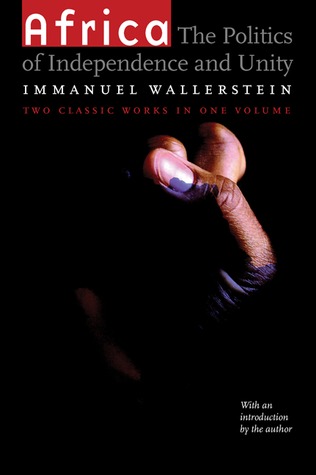
Africa: The Politics of Independence and Unity combines into one edition for the first time Africa: The Politics of Independence and Africa: The Politics of Unity. With a new introduction by the author, this edition provides some of the earliest and most valuable analysis of African politics during the period when the colonial system began to disintegrate. The influential Africa: The Politics of Independence was written as Africa was just realizing independence and still reveling in the optimism it brought. Immanuel Wallerstein was one of the few scholars who had traveled throughout Africa during the collapse of colonial rule. As a result, his interpretive essay captures the dynamism of that period of transformation and adroitly analyzes Africa’s modern political developments during the nascent process of decolonization. Africa: The Politics of Unity, published six years later, examines the African unity movement that arose between 1957 and 1965 and its revolutionary core. It is often considered the first thorough analysis of the postindependence history of Africa.

This book traces the visual and conceptual relationships evident in the works of Marcel Duchamp (1887—1968), Joseph Cornell (1903—1972), Jasper Johns (b. 1930), and Robert Rauschenberg (b. 1925). Although scholars have previously explored the biographical contact between these four artists, this is the first close look at the aesthetic consequences of their interactions. Dorothy Kosinski argues for a notion of dialogic exchange rather than influence, noting a number of shared characteristics in these artists’ works including iconography (for example, appropriation of Leonardo’s Mona Lisa), process (assemblage and collage), form (boxes), integration of text into the visual field (sardonic subtitles, nonsense inscriptions, etc.), and shared fascination with simple machines.Featuring around 50 major works by these pivotal artists, including Duchamp’s Green Box and Johns’s Device, Dialogues reveals the complex and rich exchange manifested in their art.

Religious NGOs are important sources of humanitarian aid in Africa, entering where the welfare programs of weakened states fail to provide basic services. As collaborators and critics of African states, religious NGOs occupy an important structural and ideological position. They also, however, illustrate a key irony—how economic development, a symbol of science, progress, and this-worldly material improvement, borrows heavily from other-worldly faith.
Through a study of two transnational NGOs in Zimbabwe, this book offers a nuanced depiction of development as both liberatory and limiting. Humanitarian effort is not a hopeless task, but behind the liberatory potential of Christian development lurks the sad irony that change can bring its own disappointments.
While rapt attention has been given to the supposed role of NGOs in democratizing Africa, few studies engage with the ground operations. Questioning the assumption that economic development is a move away from religious mysticism toward the scientific promise of progress, the author offers a remarkable account of development that is neither defeatist nor comforting.

In this tale of high-spirited and terrifying adventure, set against the background of the West that Larry McMurtry has made his own, By Sorrow's River is an epic in its own right, with an extraordinary young woman as its leading figure.
At the heart of this third volume of his Western saga remains the beautiful and determined Tasmin Berrybender, now married to the "Sin Killer" and mother to their young son, Monty. By Sorrow's River continues the Berrybender party's trail across the endless Great Plains of the West toward Santa Fe, where they intend, those who are lucky enough to survive the journey, to spend the winter. They meet up with a vast array of characters from the history of the West: Kit Carson, the famous scout; Le Partezon, the fearsome Sioux war chief; two aristocratic Frenchmen whose eccentric aim is to cross the Great Plains by hot air balloon; a party of slavers; a band of raiding Pawnee; and many other astonishing characters who prove, once again, that the rolling, grassy plains are not, in fact, nearly as empty of life as they look. Most of what is there is dangerous and hostile, even when faced with Tasmin's remarkable, frosty sangfroid. She is one of the strongest and most interesting of Larry McMurtry's women characters, and is at the center of this powerful and ambitious novel of the West.

In Larry McMurtry's Sin Killer, the first novel of a major four-volume work, it is 1830, and the Berrybender family, rich aristocratic English, and fiercely out of place, is on its way up the Missouri River to see the American West as it begins to open up. At the core of the book is daughter Tasmin's relationship with Jim Snow, frontiersman, ferocious Indian fighter, and part-time preacher (known up and down the Missouri as the "Sin Killer"), the strong, handsome, silent Westerner who captures her heart.
Larry McMurtry has created a wonderfully engaging family confronting every bigger-than-life personality of the frontier as the Berrybenders make their way up the great river, surviving attacks, discomfort, savage weather, and natural disaster. At once epic, comic, and as big as the West itself, it is the kind of novel that only Larry McMurtry can write.

The issue of integrity in business has been a hot topic of newscasts, numerous articles and several books. Most of these address the issue at the management level. Veteran business trainer, consultant, and author, John Grogan, now addresses it from the perspective of sales professionals.He presents a compelling vision of what you can become: a successful salesperson who is faithful to biblical standards in life and business. John then goes on to build solid sales skills on that foundation. If you want to increase your effectiveness in sales, you need to read this book!

"Developmental Science: An Advanced Textbook" provides the most comprehensive and up-to-date introduction to the field for advanced students. Readers of this textbook will obtain a new perspective on developmental science, a greater appreciation of the varied phenomena that constitute developmental science, and a fundamental grounding in developmental science itself. The text furnishes inclusive developmental perspectives on all substantial areas in psychology. The substantial revisions of chapters from previous editions and the new chapters included in this fifth edition underscore the dynamic and exciting status of contemporary developmental science.
In addition, chapters in the book:
*demonstrate that the developmental perspective transcends and enriches any narrow focus on particular points in the life span;
*introduce and review the perspectives, traditions, and approaches of developmental science; and
*exemplify the relevance of developmental science through reviews of history, theory, and substance of the subdiscipline.
The text can be used at the advanced undergraduate or introductory graduate levels.

The American church is struggling. Too many pastors no longer practice what they preach, and congregations don't just hear, they watch. Nobody's Perfect, But You Have to Be details how pastors preach with their lives as well as their lips. By delving into tough issues pastors face, the author teaches church leaders how a life of example aides their sermons with a transforming power for persuasion that can change hearts. In this life perfection is impossible, yet preachers are commanded by God to he righteous. Can this be attained while one is still human, mature in faith yet at the same time still maturing? Shriver says yes, outlining seven character traits marking lives of integrity and describing how pastoral integrity grows through practice of spiritual disciplines.